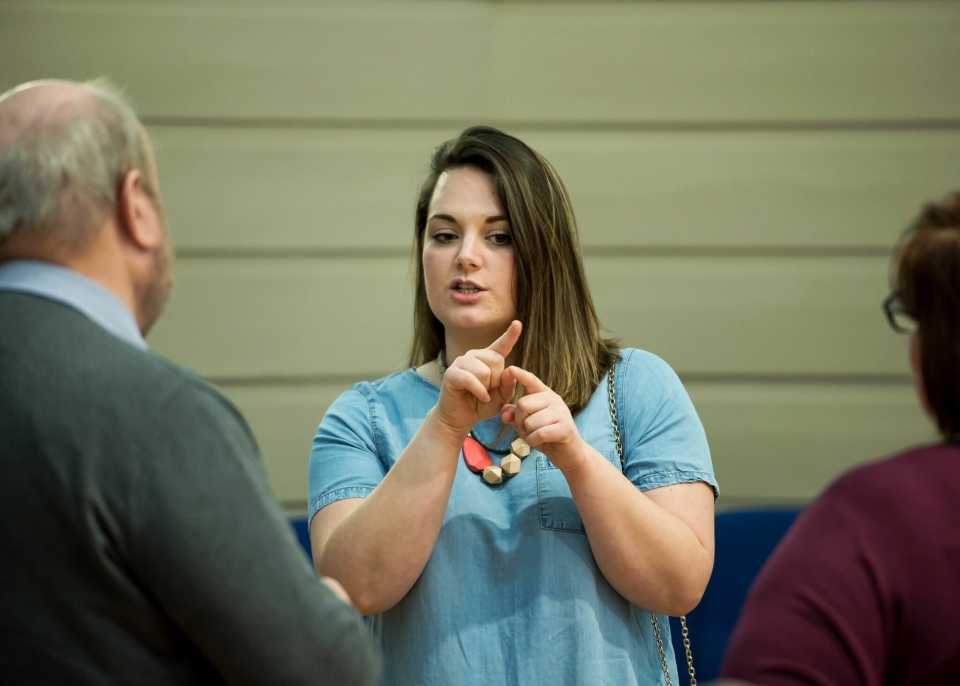
Following on from last year's event when members of Cornwall Council came to meet the Deaf community, we have invited them back for further conversation and to hear about their plans!
We are delighted that Debbie Harvey, who previously supported us as a BSL interpreter is now working as a trained counsellor.
Please contact her direct for more support and guidance:
Hello, my
name is Debbie, and I am a qualified Person-Centered Counsellor, Registered
with BACP .
I have
worked within the Deaf Community in Cornwall for over 30 years, first as a
Volunteer, then a Social Work Assistant for two years and later as a
BSL/English Interpreter and a Chaplain.
I have
recently qualified as a Person-Centered Counsellor, and I am beginning to take
on Clients. I can work using spoken English or BSL, which I am fluent in.
Counselling
is a safe place where clients can explore events, issues or feelings that are
troubling them without judgement or criticism. Life can be messy, painful and confusing at
times, sometimes it's hard to name, you just feel something is not right. There may be past or present worries,
struggles or events, but together we will create a space where those issues can
be explored, and laid down. I will not tell you what to do, but together we can
untangle your story, heal old wounds and build a stronger, kinder relationship
with yourself. During our sessions my aim will be to support you in your own
personal journey of healing and self-awareness.
Therapy
usually happens through talking or BSL, but I am aware that for some people
expressing feelings and past events may be difficult and so we could work in
visual ways, using art, crafts images etc., if this was helpful to you.
We will be
working mostly online but could work face to face if you live locally in
Cornwall, I have a Therapy room in Tuckingmill and another in the Lifehouse at Highertown
near Truro.
As a
therapist my aim would be to make it possible for any client to move in their
own way and pace to the heart of the conflict to discover change, growth,
acceptance of self and peace.
I have
experience in the following fields: Anxiety,
Depression, Grief and Loss, Relationships/identity/sexuality/gender, Cancer,
Chronic Illness, Childhood Trauma, Addition and Sexual Abuse/Rape.
If you
think we may be able to work together please contact me on debbieharvey127@me.com or 07776117105 text/What’s app (if
you prefer zoom or FaceTime, please request that)
I offer a
free 15/30 min free session where we can discuss you needs and find out if we
can work together.
Recently White River Cinema has
installed the new Watch Word technology which enables a person to view the
subtitles through a pair of smart glasses for any film that has the correct
file. This is the majority of releases that now have the ccap facility. This
technology opens up accessibility to the hard of hearing community who
currently have to visit during scheduled subtitled screenings.
They are the only cinema currently
in the south west with this technology so they would like to do a press media day
where you can come and trial the system and help them spread the word about watch
word.
They would like to invite you to a
press open day to trial the watch word for yourself.!
Hearing Loss Cornwall have been delighted to be part of this major project to provide up-to-date and vital information, to Deaf people, about Diabetes.
This is a serious condition, with many consequences, and it is vital that Deaf BSL users have access to this knowledge. The feature below will give you some background on how the NHS agreed to work with our local charity, Hearing Loss Cornwall, to create these important BSL videos.
We are organising another set of presentations at the Cornwall Deaf Community Centre to share information around a range of subjects.
Coming up in February we have two dates, supported by NHS staff and Diabetes and You, to share information about this condition.
As always, our BSL interpreters will be present to share this information to our participants. You are welcome, whether you are d/Deaf or hearing, to come along and find out more.
We have launched another set of six starter BSL dates by way of introduction to this amazing language., with some hints and tips on how to make that first contact with a Deaf BSL user.
Hearing Loss Cornwall received a grant to support Outreach Events and projects and we have been delighted to discover several people, who we now support, and we have managed to get our message out to many more services about the challenges for d/Deaf people in Cornwall. Every day, we discover people who didn't know what kind of support they could get for their deafness and hearing challenges and we have helped people who have felt very isolated.
We were delighted to know that the Cornwall Deaf Community Centre had received funding from TNLF to support and Outreach Worker for ten hours a week. While she works to support a different deaf charity, through our project, supported by TNLF, we are able to signpost people to a welcoming environment.
It has already made such a difference to both our charities which struggle for support, partly due to the fact that the challenges around deafness go largely misunderstood.
Hearing Loss Cornwall have been able to provide interpreters and communication support at outreach events and it is great to know that we can now fund this support.
PS: We know our demo shows an old version of a hearing loop...we use up to date ones!
Winter
Wellbeing Health Hub Event for Cornwall's Deaf and Hearing Loss Community
Deaf people and people with hearing loss in
Cornwall are invited to attend a winter wellbeing event (Wed 10 January 2024)
to have vaccinations (if eligible), health checks and get health advice as well
as give their views on NHS services.
Organised in collaboration with Hearing Loss Cornwall and the Deaf Community
Centre in Camborne, the NHS Cornwall and Isles of Scilly Integrated Care Board
(ICB) has arranged the event to improve access to health services and advice to
address the specific challenges faced by individuals experiencing hearing loss
following valuable feedback received from the deaf community during the ICB's
Community Conversation Engagement Programme.
Clare
Greenwood from Hearing Loss Cornwall, working with the NHS has stated , "It's heartening to see the NHS
actively engaging with our community and addressing our needs. This event will
be instrumental in providing vital information and support to those of us with
hearing loss."
Susan
Bracefield Chief Nursing Officer for NHS Cornwall and Isles of Scilly ICB, said
“Such events create an inclusive space where individuals with hearing
impairments can access healthcare resources and information easily. It's a step
towards better healthcare accessibility for our community."
The drop-in event at Cornwall Deaf Community Centre, Camborne, 5a East Charles Street, TR7 8JF is on Wednesday, January 10, 2024 open from 11am to 1pm, which, welcomes everyone, with British Sign Language Interpreters available for
enhanced accessibility.
Health
professionals from the NHS’s vaccination programme will be providing advice and
vaccines to those eligible as well as offering Health Checks which measure
height, weight, blood pressure and cholesterol test with the results shared on
the day with advice on further support also provided.
A date for your diary! 10th January 2024 at Cornwall Deaf Community Centre.
This Health Hub session will be a chance to catch up on various health questions, especially about why we should have vaccinations from a young age, and this session offers an opportunity to receive a Covid and/or a Flu jab, if you are eligible.
Smile dental also hope to be in attendance, to hear from d/Deaf people about their experiences and how they can help make things better.
Let us know if you plan to come along: email info@hearinglosscornwall.org or give us some ideas of what topics around the NHS would interest you most if you are deaf or have a hearing loss
Hearing Loss Cornwall is delighted to be launching this new service to us from SignVideo - the perfect way to hold conversations between d/Deaf people and those with hearing.
As we get more used to how this service works, we will be able to engage with people more easily across the Duchy and Isles of Scilly.
We can't wait.
Here are some of the typical services that Sign Video can be used for:
VRS allows hearing and deaf people to communicate from separate locations via the telephone.
A hearing person can use a smartphone or landline telephone to call a deaf person on their smartphone or tablet. The hearing person will hear the interpreter over the phone.
A deaf person can use their smartphone or tablet to call a hearing person on their mobile or landline. The deaf person will see the interpreter on their screen.
For all queries you can contact
the audiology Workshop on 01872253787. Call us for advice, batteries, tubes,
domes etc and we will post them out directly. If we cannot answer the phone
immediately, you can leave a message and a member of the team will return your
call. You can also contact us via email on rcht.audiology@nhs.net
with any requests and they will be post out to you directly.
The department now offers a
postal repairs service and booked repairs appointments only. The ‘open
access/drop in’ clinic is no longer available. Patients can deliver their
hearing aid to us here at Treliske and we will return it to them by post.
Please drop off hearing aids at the main reception desk of the audiology
department. Please package your hearing aid in an envelope including your name
and contact details and a brief description of the problem. Alternatively,
please send your hearing aid via the Post Office (using the Signed for service)
to ensure adequate postage. Please remember to include your name and contact
details and a brief description of the problem. Send your aid to:The Audiology Workshop, Royal
Cornwall Hospital, Truro, TR1 3LJ
If
your need is urgent or you are unable to be without your hearing aid, please
contact the department to discuss your needs on 01872 253787. We do have face-to-face
appointments daily with the repairs team at Treliske and these are primarily
for new impressions and moulds etc. We also offer these booked appointments
once a month from St Michael’s Hospital (Hayle) and Bodmin Hospital (from
January 2023).
We
also have a team of volunteers who can visit you in your home to clear and
retube your hearing aid. They can also help you learn how to use your hearing
aid and check it is fitting correctly. If you would like a volunteer visit
please call us on 01872253787.
This app has been developed to support cancer patients and their families in the South West, from the moment of their diagnosis all the way through their treatment pathway.
The app is free to download for cancer patients and their families, and acts as a patient companion which guides and supports them through their cancer treatment. It is complete with a whole range of videos, relevant links, cancer resources and contact information all specific to their own NHS Cancer Centre. It can help patients find everything they need to
know on there, from which bus to catch to the hospital right through to support
groups in their local areas and what to expect when coming in for treatment.
It also helps patients access video consultations, contains a section on side effects that may be experienced whilst on treatment, and allows patient to directly access advice on Covid 19 and how it is affecting services in their area.
Peninsula Cancer Care have recently offered Hearing Loss Cornwall to create further BSL footage to explain how to access the MySunriseApp and be able to benefit from all the fantastic advice. Currently, this is a work in progress.
Hearing Loss Cornwall are part of this project, working with the University of Plymouth, to share information, feedback and guidance about how to help older people stay active through digital technolgy. This is a fantastic project where young people are sharing their ideas and skills with the older generations and it is set to be a really exciting project.
Are you over 65 years old and want to remain in touch? Why not join us in this mission.
Hearing Loss Cornwall have been delighted to receive some funding through the Containment Outbreak Management Fund (COMF) at Cornwall Council, to provide the much valued service of BSL counselling from one BSL user to another, mitigating the need for an interpreter and enabling the person to gain contact with someone who understands what the impact of deafness is on people's daily lives.
This news has been very well received among the Deaf Community of Cornwall who have expressed their wish to use this service many times over the years.
Please feel free to contact:clare@hearinglosscornwall.org about this project or Jackie at Cornwall Deaf Community Centre who is co-ordinating the project, takenotekernow@gmail.com.
BSL users can contact their interpreter direct to get help with accessing this service.
Lipreading and managing hearing loss course at the Neetside Centre, Bude, fortnightly from Friday 17 September10am-12 noon. The classes are designed for adults with hearing loss and partners/relatives/friends who wish to support them. The sessions are run on a very sociable basis and would be good for anyone who may be experiencing loneliness or isolation or who would like to learn a new skill; a proven way of combatting dementia and depression. Text 07796 528 902 or emailAndrealcurtis99@gmail.comfor more details, or see the attached poster. Coming to Camelford & online soon.
The data held in your GP
medical records is shared with other healthcare professionals for the purposes
of your individual care. It is also shared with other organisations to support
health and care planning and research.
If you do not want your
personally identifiable patient data to be shared outside of your GP practice
for purposes except your own care, you can register an opt-out with your GP
practice. This is known as a Type 1 Opt-out.
Type 1 Opt-outs may be
discontinued in the future. If this happens then they may be turned into a
National Data Opt-out. Your GP practice will tell you if this is going to
happen and if you need to do anything.
After a long break due to Covid restrictions, the Cornwall Deaf Community Centre are opening their doors to recommence their drop in clinics. Please let Jackie know if you plan to attend. Email: takenotekernow@gmail.com
Are you a deaf person whose stress bucket is overflowing
right now?
Tinnitus, zoom fatigue, visual overload and even accessing
your GP through a screen are all having their impact. There used to be a saying, “An apple a day, keeps the doctor
away!” Right now, we seem to be suffering from both Apple and “app” overload
but some of them can give you a boost as well!
Here’s a few ideas:
In
your face? – Yes, it’s true, we don’t really like looking at ourselves all the
time and it is actually quite tiring. Why not hide your face, in zoom or
teams, so that you can concentrate on other people’s lips and use speaker
view on the gallery.
Don’t
be embarrassed to ask for assurance that the meeting you plan to attend will
offer captioning or check out the various PC options and
Download
useful apps onto your phone that will help you such as “Live Transcribe” on
android or “Petralex” or “Otter.ai”
Turn
on “Closed Captions” on your windows 10 computer
Ask
for a copy of notes and or/recording.
Ask
for some time-out if you are struggling to absorb information (probably
everyone else wants it as well!)
Make
use of the new products like Alexa and Portals to help boost the visuals.
Invest
in hearing assistive devices for conversation, phone calls etc. “Access to
Work” may be able to help you with funding if you are in employment
Here is a story that Hearing Loss Cornwall would like to share with a happy recipient of a Cochlear Implant:
"My
name is Nicola Hickling. Born
profoundly deaf to a hearing family it wasn’t discovered until I was 31/2 years
old at play school.
My
paternal grandmother took me under her wing to ensure I had access to the best
care within the NHS. She also spent many years teaching me how to speak through
a balloon so that I could feel the pronunciations
Throughout
school I was sent to mainstream as my parents felt this was the best route for
me.
I
started out with the Philips box hearing aids that were worn in a brace, when I
was 9 years old I was upgraded to the phonak behind the ear hearing aids. All
was great until I became a teenager, I could no longer wear hearing aids, due
to becoming allergic to the latex within the moulds. I was in silence until I
was 28 years old. I moved to Cornwall and met a new audiologist, she asked me
if I would like to see if I was a suitable candidate for a cochlear implant. 3
years later after intensive and invasive tests in 1998, I was accepted for a
cochlear implant.
On December
1st, I underwent the operation in Birmingham Queen Elizabeth hospital and 10
weeks later I was “switched on”.
My
audiologist Jane Ninnis helped me with "Brain training" and learning to
hear/listen again through various media such as audio books, radio and TV
(there really wasn’t any internet or smart phones back then.)
22
years later I still love my Cochlear implant it changed my life!
Find Nicola on instagram @the_cochlear_community She is also on Facebook as "the cochlear community"
While
the coronavirus pandemic has already meant that face masks and coverings have
become part of daily life, this is proving to be a huge challenge for d/Deaf
people, especially within the medical environment. The UK government and
the World Health Organisation (WHO) have both advised
wearing face coverings in a bid to reduce the infection transmission of
Covid-19, and deaf people do understand this reasoning. However, there remains
a challenge for both the clinician or medical staff and the deaf patient about
how to ensure vital communication measures are in place.
Many
people who are deaf or have hearing loss rely, heavily, on visual cues for
effective communication, including facial expressions and lip-reading. Being
able to see lip patterns and facial expressions is also vital for those who communicate
through British Sign Language. However, there is currently a national shortage
of deaf-friendly face masks with clear panels which allow users to lip read and
to see the facial aspects of British Sign Language. While this is a known
challenge, deaf patients will be hoping that in-house patient experience and
procurement teams can find some way of working to meet this need. Meanwhile,
other measures must be considered and, hopefully for the deaf person,
introduced. This could include social or physical distancing, timed
appointments, being seen immediately, and not kept in waiting rooms. Deaf
patients need patience and, therefore, often, more time.
Meanwhile, effectively understanding and capturing the
communication needs of patients with sensory loss is key. While many people
hate being labelled, the opposite can be the case with deaf people who, more
often, state that there is not enough information on, or in, their patient
files, about their deaf needs. It is essential to identify and record this
information and the communication needs of patients with sensory loss on both
the PAS/MAXIMs system, or equivalent, and their paper files. A deaf sticker
rarely causes embarrassment! A stated “hearing impairment” will not,
necessarily reflect the true nature of their communication needs. Some deaf
people have a mild to moderate hearing loss and maybe coped well enough with
their hearing aids, prior to facemask usage. However, a hearing impairment
could mean someone who has no hearing and no understanding of British Sign
Language (BSL), who could have lost their hearing through illness or accident
and never grew up with sign language. For this person, who relies on
lipreading, their communication challenge is enormous, especially as lipreading
is extremely tiring at the best of times! They will often require an electronic
notetaker for their communication support.
All clinicians will know that patients don't take in everything
that is said and, that there are many medical conditions which may hinder
communication, including neurological conditions, mental health and simply pain
or fear. So, while the problematic issue of wearing facemasks isn't peculiar to
just those with hearing loss, it's probably worse for these patients to
understand and take on board the information if, for example, they are a signer
or solely a lipreader.
And, let’s not forget that there are many NHS colleagues,
across the services who are living with hearing loss. While 1 in 5 people in
Cornwall live with hearing loss, this translates into a large percentage of
team members who are also struggling with the current requirement to wear a
facemask, not helped by the fact that, if they have to wear glasses along with
hearing aids or CI, this creates another uncomfortable physical barrier in
communicating. Alongside this, the need for social distancing takes away the
capability to get closer to enable hearing with the additional challenge of the patient also wearing a mask! Another reminder of the need for
consideration for all those with sensory needs.
Currently, it would seem that facemasks will continue to be
part of everyday life and certainly an additional requirement within the NHS
teams that have not previously needed to wear them.
Here are some ideas of how communication can be supported:
In
advance:
Ensure
that written communications, signage and patient information are very clear
Be
prepared and identify any patient/s with hearing loss, and ensure a plan is put
in place for how you are going to communicate with them, (especially if they
need an interpreter/communication support worker
In
situe:
Speak clearly, slowly, distinctly, but naturally,
without shouting or exaggerating mouth movements. Deaf people often lipread well (without masks!)
Try to find a quiet environment
Acknowledge that the person is in “receive” mode.
Avoid talking too rapidly or using sentences that
are too complex.
Keep your hands away from your face while talking
Write things down - use pen and
paper, a white board, or text on device screens. “Live Transcribe” is often a
preferred app for deaf patients, or actually, anyone who may have difficulty
‘hearing’
Use descriptive visuals to aid understanding
Try to find a different way of saying the same
thing, rather than repeating the original words over and over
Point when explaining BUT don’t use exaggerated
movements, this can be scary.
Ensure patient understands what is happening next i.e.:
injection, bloods
Clarify understanding, especially any change of subject
Never use a family member, unless
they specifically request this.
(Less
relevant during Covid).
Review future instructions – again write clearly
For Deaf BSL users:
Face the person
directly, speak to the patient (not the
interpreter!)
Sit or stand
beside the interpreter if one is present
Use a professionally
accredited BSL interpreter, details below
It is
important to reiterate that there can remain gaps in communication. Deaf
people, particularly, will admit to nodding their head because they have become
used to not being part of the conversation. It is vital that you continue to
reaffirm that the appropriate information has been received. It is not unusual
for d/Deaf people to concede that they have only heard about 50% of the
information, which is very disquieting in medical/medication scenarios.
On the
wards it is always worth checking if patients who use hearing aids, are wearing
their aids and that their batteries are working. Maybe they have come from a
procedure and not been reunited with their hearing assistance? There are some
Assistive Listening Devices which may be of help too, enquire within your
department/surgery.
These
are challenging times for everyone, clinicians, NHS colleagues and patients. Being “deaf” has so many
variances, we hope this has helped. Feel free to contact Hearing Loss
Cornwall, as below, for further assistance or signposting.
NB: Most Deaf patients, within Cornwall, have a preferred interpreter who they work with. Hearing Loss Cornwall provide British Sign Language and Communication Support to NHS and other services.
Bookings can be made through: hearingloss.cornwall@nhs.net or info@hearinglosscornwall.org. Phone: 01872 225868 or 24 hour Out of Hours: 01209 823103
Hearing Loss Cornwall have been pleased to be working with the NHS in Cornwall around the provision of various services for the Deaf. They are committed to sharing information, if possible, in BSL and several videos have already been filmed.
It is great that sign language has been acknowledged as an important part of providing vital communication links. Thanks to the local KCCG team.
The best news since the Covid crisis has been the award we have received from The National Lottery, Awards for All fund to enable us to purchase some vital digital technology, to enable accessibility for some of our Deaf people.
While most services, including vital medical and GP appointments have gone "remote", this has left many of our isolated and often shielding Deaf, feeling even more cutoff. Many essential NHS departments have been catapulted 5 years ahead, in terms of plans for remote sessions, leaving staff, as well as patients, having to learn new skills and upgrade their technology.
The fund that we have received has enabled several recipients to benefit from appropriate tablets with a training package to access essential services as well as to keep in contact with family and friends. It has been wonderful to get their feedback and realise what a huge difference this has already made to their lives!
Hearing Loss Cornwall are delighted to have received funding from the Isles of Scilly Steamship Group, to enable us to take our "Hear Me, I'm Here" project over to the Isles of Scilly.
Deafness is extremely isolating and the Isles of Scilly is also geographically isolated. Working alongside the audiology team from Royal Cornwall Hospital Treliske, we are proposing to hold an outreach event on St. Mary's. We hope to encourage local people, young and old to learn about how they can protect their hearing or benefit from assistive listening devices if they already have some hearing loss.
This project aims to inform and offer support and signposting on the topic of hearing loss. While 1 in 5 people in the Duchy are affected, sometimes profoundly, by this condition, the subject is often ignored, forgotten or misunderstood.
Our team looks forward to getting over there as soon as circumstances allow!
There are a number of reasons why hearing aids have
not been designed to be worn at night time. With the idea your brain itself is
recharging and you have no need to listen to the outside world for this period
of time means that you can have a break from your hearing aid.
Comfort Hearing
aids either Behind The Ear or In The Ear can rub or put pressure on your ear
especially when lying on your side, the hearing aid can push down onto that
ear. It can cause soreness, become warm and irritating.
Battery Life Using your hearing aid at night time will eat
through your batteries much quicker and this is why it is important that when
you take your hearing aids out at night that you open your hearing aid battery
draw to reduce accidental battery consumption when you are not wearing them. If
you are using a rechargeable hearing aid you will need to recharge it at some
point in the day and the night time is the best time to do this when you are in
bed and asleep.
Feedback When
lying on your hearing aid and it's in your ear while sleeping, your
hearing aid is likely to be pressed up against your bedding and pillow. When
objects are particularly close to your hearing aid microphones you may hear a
lot of rustling about but you may also get the presence of whistling. Which in
turn you might find keeps you up.
Allowing Your Ears to Breathe After
a long day of hearing aid use, your ears can become sweaty, warm and especially
when you are just getting used to a hearing aid it can relieve the presence of
a new foreign object in your ear. Allowing your ears time to breathe overnight
provides them with the right amount of time for your ears to re-regulate, ready
for the next day ahead.
However,
what if you do still need to be able to hear and your hearing loss means that
without your hearing aid you cannot hear important sounds. This could be because you may have a newborn baby
you need to listen out for. A family member maybe suffering with nightmares and
you want to be able to help them. You may be thinking can you hear the fire
alarm if it goes off.
Let’s
look at some options:
Vibrating Alerts The
use of a hearing aid is not the only option in these situations. You can get
vibrating alert devices that can sit under your pillow at night time. Vibrating
smoke alarms are a particularly important feature if you are severe to proudly
deaf and know you will not be able to hear a smoke alarm if it goes off in your
house.
There
are a number of baby monitors such as the Amplicomms V160 that also come with a
wake me up vibrational alarm. You can also have a vibrational wrist band such
as the Summer infant babble band that you will still need to wear but it allows
you to take your hearing aid out.
With
any of these devices it is important to make sure the batteries are changed and
the device is kept charged to provide you with the assistance you need.
Hearing Aid Implants There
are a rare number of hearing aids that sit within your ear canal that allow you
to wear it all day long without needing to remove it. A hearing aid such as
this is called a hearing implant that is inserted into your ear by a hearing
specialist and can be left for a number of months. Phonak Lyric is one of
these. Worn 24 hours a day, all the workings are in one tiny capsule.
Action
Fraud warns public of courier fraud after £10.5 million reported loss in two
years Action Fraud received over 2,000 reports of courier fraud in two years Nearly two thirds of victims were women over 75 On average, victims lost over £8,000
each to courier fraudsters
Action Fraud is warning the public to be wary of courier fraud after receiving
2,171 reports between August 2017 and July 2019. The total reported losses in
the same period were £10,549,793.
The latest figures from the national fraud and cyber crime reporting centre,
reveal that the majority of courier fraud victims are elderly, with more than
half aged 80 or over at the time of reporting. Only 3% of all courier fraud
victims were under 50 years old.
The most likely demographic to be targeted by courier fraudsters are women over
75 years old (62%). The largest proportion of victims resided in London (32%)
and the south east of England (19%). On average, victims reported losing £8,346
each to courier fraudsters.
What’s courier fraud?
Criminals typically carry out courier fraud by cold calling the victim,
purporting to be a police officer or bank official to gain their trust. The
fraudsters will then claim there’s an issue with the victim’s bank account or
request their assistance with an ongoing bank or police investigation.
The ultimate aim of this call is to trick them into handing over money or their
bank details.
Common techniques used by the fraudsters include telling the victim to withdraw
large sums of cash or go and buy high value items. Sometimes they instruct the
victim to leave their bank cards in an envelope somewhere safe. In all cases, a
‘courier’ will then come and pick up the cash, expensive item or envelope, on
behalf of the police or bank. They will often come to the victim’s home
address. What’s being done to stop it?
Law enforcement agencies are working with banks to fight back against this type
of fraud through a rapid-response scheme called the ‘Banking Protocol’. This industry-wide initiative trains bank branch staff on how to spot when
someone is about to fall victim to a scam and what they can do to prevent them
from withdrawing cash to give to a fraudster. The staff can request an
immediate police response to the branch to investigate the suspected fraud and
catch those responsible. The ‘Banking Protocol’ is now operational across the UK and has already
prevented customers from losing £38 million to criminals. It also led to 231
arrests in 2018.
Protect yourself
Behind all of the clever tricks and ever-changing narratives, there are a few
basic recurring elements that are common across many frauds, including courier
fraud. Here’s what you need to remember:
Your bank or the police will never:
Call and ask you for your full PIN or full banking passwordAsk you to withdraw money to hand over to them
Ask you to transfer money out of your account
It pays to stop and think anytime you receive a request for personal or
financial information. Remember, if you feel uncomfortable or unsure about what
you’re being asked to do, never hesitate to contact your bank or financial
service provider directly, using a number you trust, such as the one listed on
your bank statements or on the back of your card. Alternatively, sense check
your actions with a trusted friend or family member and get their advice on
whether you should go through with any action relating to your finances.
Commander Karen Baxter, National Police
Coordinator for Economic Crime at the City of London Police, said:
“Courier fraud affects the most vulnerable people in our communities. It’s
important we all do what we can to protect these individuals and raise
awareness of how people can protect themselves.
"The ‘Banking Protocol’ is just one of many ways police forces across the UK
are working in collaboration with the banking sector to protect people from
fraud. You can assist us by looking out for those in your community, in your circle
of friends, or even within your family, that may be susceptible to this type of
fraud. Victims tend to be elderly, living alone, and trusting of the police and
other official organisations. By informing them this type of crime is happening
and encouraging them to report any attempts of courier fraud, successful or
not, to Action Fraud and the police, you can help us create a hostile
environment for fraudsters.”
State of Care is our annual assessment of health care and social care in England.
The report looks at the trends, shares examples of good and outstanding care, and highlights where care needs to improve.
Summary
Most of the care that we see across England is good quality and, overall, the quality is improving slightly.
But people do not always have good experiences of care and they have told us about the difficulties they face in trying to get care and support. Sometimes people don’t get the care they need until it’s too late and things have seriously worsened for them.
This struggle to access care can affect anyone.
Too many people find it hard to even get appointments, but the lack of access is especially worrying when it affects people who are less able to speak up for themselves – such as children and young people with mental health problems or people with a learning disability.
Too often, people must chase around different care services even to access basic support. In the worst cases, people end up in crisis or with the wrong kind of care.
We all know how important communication is for living a happy and productive life. Not understanding, not being understood or able to communicate your needs or choices, can be very isolating. Meeting the needs of clients and employees with cognitive and communication difficulties is fundamental for being a truly inclusive business. But where do you start? What practical steps can you take?
That’s where TALKmoreCORNWALL CIC come in. TALKmoreCORNWALL CIC provides a range of Makaton
workshops across Cornwall. Makaton is a language programme that uses
signs and symbols to help people communicate. It’s easy to learn, designed to
support spoken language and can be used straight away. Ideal for
individuals who find it difficult to communicate by speaking, Makaton’s signs
and symbols are used with speech, in spoken word order, simplifying
communication, reducing frustration and encouraging sociability.
Makaton has been proven to improve the communication skills of people with
hearing loss, learning disabilities, muscle disease or physical disability,
dementia or Alzheimer’s, or those who have suffered a stroke. Highly flexible,
Makaton can be personalised to meet individual needs and abilities, and can be
used to signpost areas in a building or label rooms and items.
TALKmoreCORNWALL CIC has recently received some funding from the National
Lottery Awards for All to enable them to offer Makaton training across
Cornwall.
Find out how your organisation or business can become Makaton friendly on:
Throughout the spring and summer of 2019, Hearing Loss
Cornwall have been part of discussions and challenges regarding the provision
of British Sign Language interpretation services for the Deaf across Cornwall,
with regard to accessing GP's, dentists and other NHS England services.
It is with great delight that we can announce, that
following these intense and sometimes fraught discussions, also involving
members from the Cornwall Deaf Community Centre in Camborne, Hearing Loss
Cornwall have been advised that they can maintain their current service and provision with NHS England Soutwest, while the procurement of this essential service to the Deaf, is given a more
detailed appraisal.
Hearing Loss Cornwall would like to thank all those involved
in helping to inform this process which has achieved this positive outcome. Our
charity is honoured to support deaf needs in Cornwall under many guises,
working with Cornwall Council, the NHS, various health and professional providers
and mostly with the d/Deaf themselves.
A cure for tinnitus could come in the
form of a pill following a breakthrough by scientist. The debilitating
condition was stopped in mice by blocking a protein that fuels brain
inflammation. The US team of scientist are hopeful it will lead to a gene
therapy to combat ringing in the ears and other hearing loss disorders. About
one in 10 people in the UK suffers from tinnitus which can cause stress, sleep
difficulties, anxiety and hearing loss. The condition is often linked with
Meniere’s disease, diabetes, multiple sclerosis and depression. However, it is
not known how it develops, and there is no cure. The study, published in the
journal PLOS Biology, suggests it is caused by a molecule called TNF-A (tumour
necrosis factor alpha) that disrupts communication between neurons. Blocking it
pharmacologically also prevented tinnitus in lab rodents that developed the
condition after being exposed to loud noise for two hours.
The findings suggest neuro inflammation
may be a therapeutic target for treating tinnitus and other hearing problems,
said the researchers. Study co-author Professor Shaowen Bao said: ‘Genetic knock
out of TNF-A or pharmacologically blocking its expression prevented
neuro-inflammation and ameliorated the behaviour associated with tinnitus in
mice with noise induced hearing loss.’ Analysis showed inflammation in a
sound-processing region of the brain controls ringing in the ears in the
affected mice that have noise-induced hearing loss. Prof Bao, a neuroscientist
at the University of Arizona in the US, said: ‘Hearing loss is a widespread
condition that affects approximately 500 million individuals, and is a major
risk factor for tinnitus – the perception of noise or ringing in the ears.’
Recent research suggests hearing loss
causes inflammation – the immune system’s response to injury and infection – in
the auditory pathway. But its contribution to hearing loss-related conditions
such as tinnitus is still poorly understood. If you're suffering from tinnitus
Action on Hearing Loss has a dedicated Tinnitus Information Line which provides
vital support to those affected and their families and would encourage anyone
affected not to suffer in silence. The line is available on 0808 808 6666 to
phone, but you can also text 0808 808 9000 and email tinnitushelpline@hearingloss.org.uk
Dr Bao and his colleagues examined
neuro-inflammation – inflammation that affects the nervous system – in the
auditory cortex of the brain following noise-induced hearing loss, and its role
in tinnitus, in the rodent models. He said: ‘The results indicate noise-induced
hearing loss is associated with elevated levels of molecules called
proinflammatory cytokines and the activation of non-neuronal cells called
microglia – two defining features of neuroinflammatory responses – in the
primary auditory cortex.’ Dr Bao added: ‘These results implicate
neuro-inflammation as a therapeutic target for treating tinnitus and other
hearing loss related disorders.’ But he pointed out that although the therapy
was successful in the animals, its potential adverse affects need to be
thoroughly investigated before any human trials. The most common cause of
tinnitus is damage and loss of the tiny sensory hair cells in the cochlea of
the inner ear. This tends to happen as people age, and it can also result from
prolonged exposure to excessively loud noise. Hearing loss may coincide with
tinnitus. Most people with chronic tinnitus adjust to the ringing over time,
but one in five will find it disturbing or debilitating.
VoluntEars
is a specialised organisation that arranges trips to Nepal, Sri Lanka and Ghana
for D/deaf, hearing and hard-of-hearing people. You can read about them here: www.VoluntEars.info
What they say:
All trips are an amazing mix of volunteering at a local Deaf school where we do
some simple
renovation work like painting dormitories or classrooms and doing activities with
the local deaf students. We also visit all the local sights like huge markets
selling tropical
fruits and veg, ancient Hindu and Buddhist temples, do a cooking class to learn
how to make local foo and a local sign language class, in Sri Lanka.
You'll;
work
with sea
turtles on a beach for 1 day and visit an elephant orphanage, in Nepal do a 3- day
trek in the Himalayan mountains. and, also get time to relax!
All
our trips are accompanied by experienced BSL Communicators to enable smooth communication
throughout every trip.
Who are
our volunteers?
Our
volunteers are a mix of D/deaf, hard-of-hearing and hearing people who are connected
to the deaf community.
We
welcome all ages; from people at school, college or university to people taking
a short
break from their career and older people looking for an overseas trip with a difference.
Who
benefits from our trips?
Volunteers
gain huge confidence from working in a group with other D/deaf and hard-of-hearing
people while exploring a stunning new country. Equally, we work hard to ensure
the local Deaf school benefits from our work
Adding SMS to the number of ways rail passengers can “Contact Us” the Rail Ombudsman is responding to customer feedback and making their services more accessible.
Ted Pottage, a member of the Surrey Coalition of Disabled People, got in touch with the Rail Ombudsman to highlight the benefits of SMS, particularly for passengers with hearing impairments. Following a meeting with Mr Pottage and Stephen Rolph, the Surrey County Organiser for Railfuture, as well as a successful trial, the Rail Ombudsman is now introducing SMS to its list of communication channels, which include textphone, telephone, webform, email and twitter.
The Rail Ombudsman was established on the 26th November 2018 and can investigate unresolved complaints regarding rail issues including;
• Passenger assistance facilities for customers with disabilities and issues arising under the Equality Act 2010.
• Availability and access to station facilities including toilets, lifts, escalators, waiting rooms, parking, cycle storage, announcements, ticket sales, and lost property.
• The quality of services available on a train including toilets, information, announcements, reserved seats and other advertised facilities.
Ted Pottage from the Surrey Coalition of Disabled People said:
“I’m delighted that the Rail Ombudsman is now accessible by SMS. It is vital that disabled people can get in touch with the Ombudsman when they have unresolved disputes with rail companies. This is an important new service that should help us to get a better service on our railways.”
Billy Quinn, Managing Director of the Rail Ombudsman, said:
“As the UK’s first Rail Ombudsman, we are determined to listen and respond to passenger’s needs. We are very grateful to the Surrey Coalition of Disabled People for highlighting this issue and helping us to trial and launch this service.”
Please help us promote this service and the new SMS Number 07427 580 060
The Rail Ombudsman introduces a new SMS text service - making it more accessible to people with hearing impairments.
Following a lot of concerns about the lack of knowledge and support for people who suffer with this condition, with support from the British Tinnitus Association, the Truro group launched on Wednesday 17th April at Truro Library on Pydar Street.
Future dates and venues to be confirmed but the inaugural meeting was well received.
It is hoped that this network will grow, so why not come along and find out more. Watch this space for further information or key tinnitus into the search bar and the information will come up...soon!
Today marks the start of a
review period during which we are consulting on the suitability of polling
stations and voting arrangements at elections. The review will aim to ensure
that voting arrangements for future elections suit the needs of the electors in
each area. By law, Cornwall Council must conduct this Polling Districts
and Polling Places Review every five years.
You can find more detailed information on the council's website at www.cornwall.gov.uk/review.
For example, you can find information on current polling stations and whether the council intend to retain them or seek/offer an alternative. This information is
listed first by parliamentary constituency and then by electoral
division. Each division schedule is then broken down into individual
polling districts. You can access the schedules and associated maps here:
by post
to: Polling Review, Electoral Services, Cornwall Council, 39
Penwinnick Road, St Austell, PL25 5DR
All responses to the first
stage of the review must be received by Monday 15 April 2019. If you need
more information, please contact either John Simmons (01579 341533 / john.simmons@cornwall.gov.uk) or
Alison Webb (01209 614191 / alison.webb@cornwall.gov.uk).
When surfing in cold environments, always think about your
ears before you go, make sure you've packed your extra layers and ear
protection and then the surfing, is all about surfing. You don't have to worry
about the cold or big slams and your ears and head will thank you for it.
How Can Surfing Affect Your Ears
Regular exposure to cold wind and water can cause bony
growths within your ear canal to develop. This can trap water and debris which
has the potential to cause a painful ear infection. In some cases when the
growths begin to close the ear canal, causing slight deafness, surgery is
required to remove these growths. This surgery can require several weeks for
your ear to heal fully and therefore you will need to stay out of the water for
this time period.
With better technology neoprene, thicker wetsuits and ear
accesories available on the market, more people are surfing cold waters than
ever before, increasing the risk of surfers ear.
If you are concerned you may have surfers ear, it is
worth consulting your Doctor or Audiologist for an ear
examination.
Go to Hearing Helper
for further information on protective gear https://www.yourhearinghelper.com
Barclays offer new lipspeaker service for customers with hearing loss
Barclays bank customers who have hearing loss will be able to have their telephone conversations with the bank interpreted by a lipspeaker, thanks to a new service.
In a UK banking first, this new development aims to make sure all Barclays customers are able to access telephone banking services more easily.
Once a customer has opted-in and set up this service, a unique marker will be attached to their profile and they will be able to use a lipspeaker in future conversations with the bank. The service can be accessed 7 days a week, 365 days a year between 8am and 9pm.
For customers who aren’t registered, Barclays also has a ‘Live Chat’ facility within the Barclays Mobile Banking app, providing a secure instant-messaging service to help customers access their banking anywhere, anytime.
Kathryn Townsend, Head of Customer and Client Accessibility at Barclays UK, said: “Barclays puts accessibility at the heart of what we do, and places a lot of importance on getting this right for customers. The introduction of this new service for Deaf and hard of hearing customers provides another example of where we have listened to our customers, and made changes based on their feedback.”
Ellie Parfitt, @deafieblogger and the Barclays customer who helped develop this new service, said: “It’s fantastic to see that Barclays has implemented a new system for deaf people like myself, who need to make banking enquiry phone calls through a lipspeaker. It gives us freedom to become more independent and makes our banking experiences easier and more accessible.
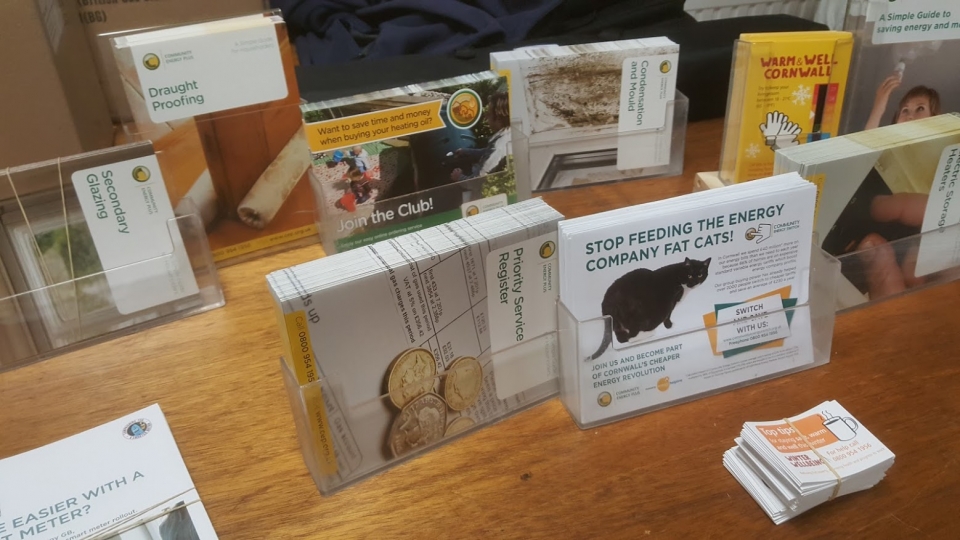
Over the past few weeks we have delivered several workshops about the introduction of Smart Energy meters, specifically with a focus on the Deaf and Hard of Hearing. it was great to get out into different areas in Cornwall and to meet a diverse range of groups.
Working with Community Energy Plus, based in Truro, we were able to get a grant from "Smart Energy GB in Communties" to deliver these presentations with communication support provided.
There was an opportunity to ask questions and Community Energy Plus are happy to answer any further queries. Contact: 01872 245566/0800 954 1956 or advice@cep.org.uk
Hearing Loss Cornwall also have a supply of leaflets and have received some training on the topic, so feel free to ask.
Despite the wet and windy day, we enjoyed being part of this, now annual event, Truro Mayor's Charity Day. Having received a wonderful array of Christmas gifts, we were able to create a tombola stand with a difference.
People were encouraged to dip their hands into fake snow to pull out the matching bauble. Yes, we did have a few buried there with their matching green ribbons. As with all these events, we welcome the opportunity to be seen and to engage with the local community.
A “hearing aid in the sky” that allows partially
deaf people to use mobile phones is to be introduced across the country after a
successful trial on the Isle of Man.
Ninety per cent of people who used the service,
which tailors the live signal to individual hearing loss, said that it made
speech over the phone clearer and helped them to understand conversations,
according to the findings of a clinical trial funded by the Wellcome Trust.
Now the company behind it said that plans were
under way to offer it to the estimated 11 million Britons who suffer from some
form of hearing problem.
When sound is digitally encoded and sent across
mobile phone networks, it is compressed and a large part of the audio
spectrum is lost. For people with good hearing this is not a problem but for
those without, it can cause difficulties, particularly as their own hearing
aids, tailored to normal speech, are often unable to help.
Matthew Turner was one of those affected by this
and decided to set up a company to solve it. “I have moderate to severe hearing
loss,” he said. “Once I started doing corporate finance, the mobile phone
became an important part of our lives and I realised that I was really
struggling to use the mobile phone. I asked a simple question, ‘Why is there
not a voice signal as powerful and clear as a hearing aid?’
His company, Goshawk Communications, created a
system that, rather than increasing the volume, intercepts the signal and sends
an altered version without any delay to a phone. Users first do a hearing test
to identify their level of impairment and whether they struggle with high or
low frequencies.
“What people misunderstand is they think if you
talk loudly to someone who is deaf, it makes a difference,” Mr Turner said.
“It’s not about volume but about intelligibility and clarity. It’s about
understanding hearing loss and increasing volume for those frequencies you
can’t hear. It only takes the brain to maybe hear an extra one or two words,
then it can fill in the rest of the sentence.”
The operator EE is preparing to offer the
technology to its mobile customers.
On an additional note, Hearing aids and cataract surgery can slow down the rate of memory
loss by up to 75 per cent, according to two studies by Manchester University
academics, published in PLOS One and the Journal of the American
Geriatrics Society, that compared mental decline in people in England
and America.
Due to an important staff meeting we will be closing the office at 1.30pm on Wednesday 22nd August.
Meanwhile, we apologise for the renovation works in the building which means that it will be difficult for the public to gain access over the next couple of weeks.
Hearing Loss Cornwall offer hearing assistive products for people to try before they buy.
Sticking the radio on, listening to the gossip, getting annoyed by the seagulls, hearing the sound of the waves and just knowing what is going on…Isn’t it hard to imagine not being able to do many, or any of these things?
When all is going well, it is easy to take simple tasks and mundane routine things for granted, but for people living with hearing loss, there exists no such luxury as routine!
Everyone has a different level or form of hearing loss and it can be very expensive and upsetting to purchase an ineffective product. From telephones to textphones, personal loop systems to TV listening devices, we demonstrate and loan products so that people have the opportunity to find the best solutions to the challenges of hearing in a world geared to sound.
.We would like to expand this service and update some products which have been improved and be able to offer more choice and guidance.
We have been informed by local people with hearing difficulties, that the new parking meters have been installed with "dalek" like voices that cannot be discerned by "humanoids" with certain forms of hearing loss...and obviously, not by those who are profoundly Deaf!
Hearing Loss Cornwall will try to find out if anything can be done to help, meanwhile a suggestion is to use the "Just Parking App", if you can!
Good luck and let us know how you get on and we will do the same.
Would you like to meet others to communicate in BSL in an
informal setting? Discuss topics important to the Deaf Community? Get in
additional practice in between BSL classes or keep learning while waiting to
start the next level?
Then come to Cornwall
Deaf Community Club on Thursday 2nd November 6.30 – 8.00pm to meet other
like-minded people and practise your BSL in an informal setting. All levels
welcome!
Suggested contribution towards Deaf Club costs:
Members £3.00
Non-members £5.00
Refreshments will be available.
If you are interested in coming to this or future
sessions please contact Sarah Wardle by e-mail on sarahmwardle@yahoo.co.uk or by text
on 07450948886 or call Jackie Goldie on 07825136970.
So many d/Deaf people don't know that they can benefit from a "Disabled Person's Railcard". You can get 1/3 off rail fares for you and a friend, so why not enjoy getting out and about...you can stay in Cornwall!
You need to pay for the initial card, but even on the first trip you may well get an immediate return on this investment.
Lipreading deaf may also apply...we know you don't necessarily wear hearing aids!
Here's the link. https://www.disabledpersons-railcard.co.uk/using-your-railcard/the-benefits/
Enjoy!
Photo: By Geof Sheppard - Own work, CC BY-SA 3.0, https://commons.wikimedia.org/w/index.php?curid=2591593
There are, as many as, 1 in 4 of the population in Cornwall who live with noise induced hearing loss. A large cohort come from the services with ex-servicemen being particularly vulnerable to hearing loss.
Despite the best endeavours to provide ear defenders and hearing protection, there are many servicemen, including our own Chair of Trustees, Jamie Hanlon, who report various stories of how they became deafened or now suffer from tinnitus.
Even if a simulated explosive goes off right next to you this has an impact. Many people will wear those masks that cover your full head like a motorcycle helmet, but if the earplug falls out, as the explosion goes off, the helmet funnels the sound and shock right into the ear. Or think of that momentary lapse when the protection isn't in place but a loud noise goes off or an earplug is incorrectly placed.
With servicemen and women operating in ships, aeroplanes, helicopters and other craft who are working in and on machinery and mechanical equipment, you can start to imagine the impact that noise can have in their daily lives. Deafness can creep on by stealth with a gradual exposure to noise or can happen in an instant, with lasting effect. Any ex-veterans may find that they can be helped by these charities listed below:
Meanwhile, Hearing Loss Cornwall will continue in its own mission to promote Deaf Awareness and on how to protect your hearing!
Hearing Loss Cornwall were
delighted to receive funding from the ERDF Smartline Project to launch a new
service loaning the excellent digital hearing assistive device called the
Roger Pen and Mylink.
It is available to hire from us, to use at meetings and events where there may be a difficulty for people with hearing aids to capture all the conversation or lecture. It is a very discreet system yet its impact is amazing.
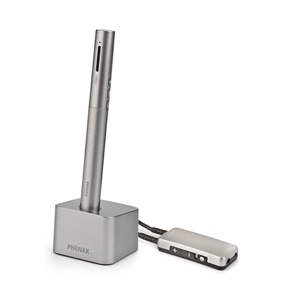
The Phonak Wireless Listening Device, the Roger Pen & MyLink bundle is ideal for everyday use - coming as it does with a range of functions and uses. It can be used to amplify sound and feed it directly to your hearing aids in a variety of situations. It comes with a Roger Pen which acts as the transmitter. This is a microphone which can pick up directional sound, whilst reducing background noise. This is perfect in a conversation or a meeting, where it can be placed on a table or held by the speaker. The sound is picked up by compatible Phonak digital hearing aids, or by the MyLink Neckloop receiver which is worn around your neck. All you need to do to hear the sounds picked up from the Roger Pen is make sure your hearing aids are set to "loop" or "T-setting".
The Phonak Wireless Listening Device is brilliant all-purpose tool for relaxing, working and socialising.
In a large group, sitting round a table - Stick your Roger Pen on the table and it will automatically switch to an omni-directional mode so you can hear everyone sat with you.
Out and about - Wherever you are, simply point the Roger pen to the person you wish to listen to and you'll hear them loud and clear.
Listening to a presentation - Give the Roger Pen to the lecturer or tour guide so you can hear as clearly as if they were standing next to you. The Roger Pen comes with a lanyard for easy wearing too.
Watching TV - You can plug in the charging station to the TV via the scart, phono and jack plug connections (included). Perfect for enjoying your favourite shows without annoying anyone else with high sound volumes.
Roger Pen features:
Automatic omni-directional and directional microphone pick-up mode
Advanced ‘beam forming’, this will improve speech understanding significantly when a Roger Pen is pointed towards the speaker
When an audio source is connected to the Roger Pen, the dynamic range is enhanced
Range up to 20m
Rechargeable battery with up to 5 hours on Bluetooth, 7 hours as a microphone
Charging status LED
Power on/off button and indicator
Pairing status LED
The pen design makes it discreet to use
Bluetooth for mobile phone use (up to 10m)
Up to 10 Roger microphones can be added to your Roger Pen, making it ideal to pick up separate voices.
Mute button
Last number redial, voice dial and call transfer options
Supplied with a charging docking station and which can also be connected to through audio equipment too (e.g. TV)
Operates on 2.4GHz (global unlicensed frequency)
Roger MyLink Neckloop Receiver:
Push-button volume control and LED
On/off switch
Range up to 20m
Rechargeable battery with up to 10 hours life
Battery and charging status led
Headphone socket (2.5mm jack socket)
Automatic Gain Control protects you from extremely loud sounds
The Phonak Wireless Listening Device can also be connected directly to a TV, MP3 player, HiFi and be used with your Bluetooth mobile so you can operate it hands-free.
Hearing Loss Cornwall have three receivers availalble to enable more than one deaf person to benefit at a time.
Due to the nature of the product we do have to request a deposit payment in advance of the loan and, ideally, as much notice as possible is required, so that you can rely on it being available.
Here is a product available through our "Try before you buy" service.
Frustrated with missing important phone calls? The Geemarc
Amplipower 50 Hearing Aid Compatible Phone comes with a range of features
and benefits to suit all types of hearing loss.
Adjust the sound to suit your hearing loss The tone control function allows you to adjust the bass and treble of the caller’s voice. For example, if you find it difficult to hear people with a high pitched voice then you can use this feature to deepen their voice. You can of course adjust the volume too making it a great phone for people with hearing aids.
Cut out background noise
This phone is hearing aid compatible so you can listen to the call directly through your hearing aid which blocks out unwanted background noise, making it much easier to hear the call. This is particularly helpful if your family tends to be a bit noisy while you’re on the phone.
Keep your hands-free while you talk This amplified corded phone has a hands-free function allowing you to speak and hear without holding the handset, leaving your hands free to write or type.
The hands-free option enables you to hear and speak without holding the handset so you can write or type more easily while you're on the phone.
Save money calling people back It’s a pain when you keep missing calls and have to spend money calling people back. This hearing aid compatible phone helps ensure you won’t miss any more calls because it has an amplified ringer. If the ringer is still not loud enough then you can use the flashing light function which will alert you to an incoming call.
Call friends and family at the touch of a button There are 12 speed-dial buttons on this corded phone for the hard of hearing so you can dial your most commonly called contacts at the press of a button.
Take care with the volume The Geemarc AmpliPower 50 hearing assisted phone has adjustable volume so it can be used by people with different levels of hearing, however due to the very high maximum volume care should be taken to ensure that any new users are familiar with this equipment.
Features:
Maximum handset volume of 132dB
Maximum ringer volume of 81dB
Controls the tone of the caller’s voice
Cuts out background noise
Three ringer volume settings: mute, medium, maximum
Nine ringer melodies
Bright xenon flash to indicate incoming calls (can be switched off)
Option of ringer and pad or ringer and flash alert
Hands-free (loudspeaker)
Large and bold buttons
Battery back-up (4xAAA batteries) for the ringer
12 speed-dial buttons
Last number redial
Time break recall
Mute button
Wall mountable
Headset option (see headset accessory below)
2.5mm neckloop jack socket (see CLA7 neckloop accessory )
3.5mm jack socket for vibrating pad (see pad accessory )
Direct vibe handset option (see direct vibe handset accessory)
British Sign Language interpreters are trained to a very high level, which takes them years to attain.
We are delighted that Catherine Hall has, recently, become part of our team, acting as an interpreter in health and business appointments.
It is essential that health and well-being providers understand that not everyone who has learnt some BSL can be an interpreter. In fact, every interpreter will have trained up to Level 6 in BSL, then will have gone on to do an extra training in interpreting. It is a rare skill that takes a lot of commitment and understanding of the Deaf community and their culture.
Signing is a wonderful, expressive language and many people would love to see it adopted as an essential skill, taught in schools from an early age!
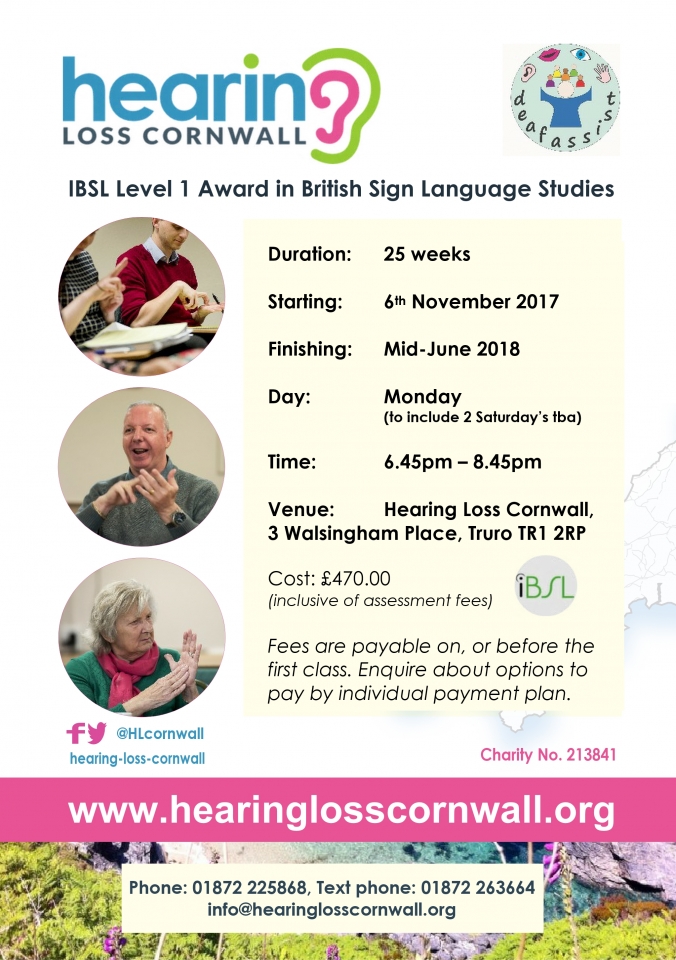
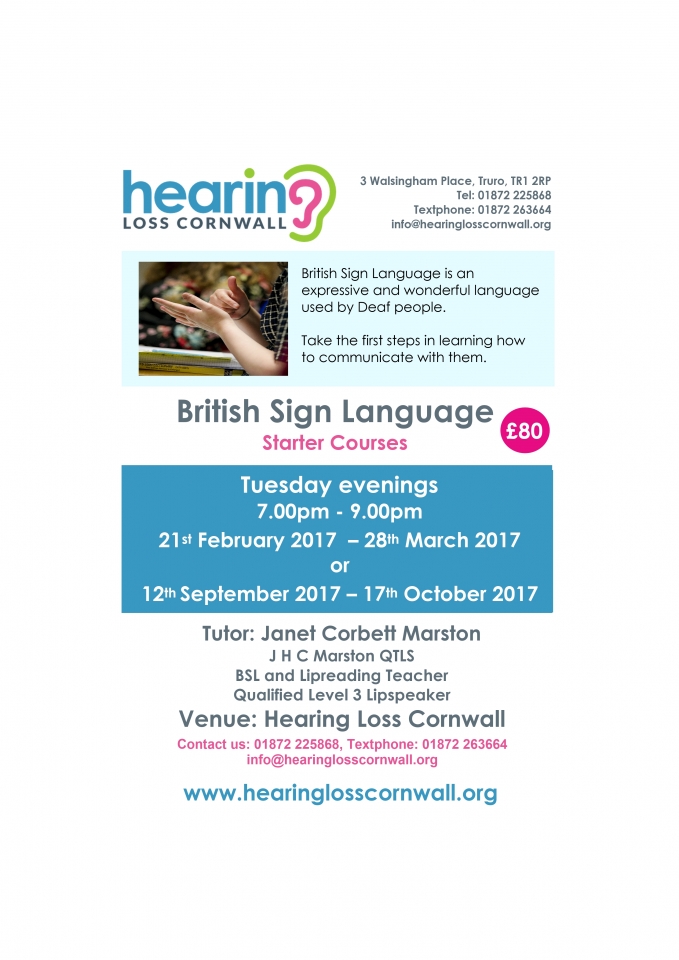
We offer BSL Level 1 and 2 courses, as well as some starter sessions and also appreciate the opportunity to share Deaf Awareness at your chosen venue.
The St. Blazey, Par and Tywardreath Club for Deaf and Hard
of Hearing People Club has not been active for some while now and many may
think the Club now renamed Deaf Club PL 24 Mid Cornwall is moribund… …not
quite. Although there have not been meetings recently at St. May’s
Methodist Church in Par, members are kept in touch on matters of interest to
deafened people. The Chairman of the Club spotted in the Western
Morning News last year a news article with the title 'Cash Boost for
charity which helps the deaf.' It was about Action on Hearing Loss
formerly known as the Royal National Institution for the Deaf (R. N. I. D.)
being awarded nearly £400,000 by the Big Lottery Fund to deliver vital
information and support for those with hearing loss in Devon and Cornwall and
to help reduce social isolation. Action on Hearing Loss have set up
the ‘Hear to Inform and Support’ project which will work with local groups such
as community clubs to increase their ability to support those with deafness,
tinnitus and hearing loss. The Club aims to be an inclusive group which
seeks to promote the social life and the welfare of deaf and hard of hearing
people and so supports Action on Hearing Loss with the Hear to Inform and
Support project and would want to help make the project a success. The
Chairman of the Club has volunteered to support the project on behalf of the
Club.
A former saleroom for
antiques and furniture, Cornubia Hall, in Par has been purchased by the Par Bay
Community Trust. Following an exchange of e–mails with the Chair of the
Trust, the suggestion was made that the Club with the Club’s speech to text
equipment move to Cornubia Hall. The Club’s equipment will help meet
the Trustees responsibilities to people with protected characteristics, which
includes deafened people, under the Equality Act, 2010. The Club
would base itself in what will become a community resource. An aim of
the 'Hear to Inform and Support' project is to set up hubs to which
deafened people can go to. The idea is that you drop in for a tea, coffee
and a chat with a member of the Club. Got a problem? Through the
'Hear to Inform and Support' project we should be able to point you in the
right direction to the help you need. The Par Bay Community Trust Committee
views the request of the Club to move to Cornubia Hall favourably and will
build the needs of deafened people into their future plans, including the
provision of a hearing loop.
The renovation of
Cornubia Hall will not be happening for a while with, as a rough guide, the
renovation may be sufficiently complete, if only of a part of the Cornubia
Hall, to be open to the public in November this year. It is all tentative
but with progress with the work of renovation the move of the Club would take
place and the Club would start to contribute to the 'Hear to Inform and
Support' project for the benefit of us all.
Meanwhile, the Chairman
of the Club will be having meetings the Project Co-ordinator and others as a
beginning to supporting the Action on Hearing Loss project.
Hearing Loss Cornwall have been out and about a lot, in recent weeks. Members of the team have had the chance to talk to several Rotarians at their recent annual area conference at the Atlantic Hotel in Newquay.
Not surprisingly, many of the Rotary Clubs claimed to have several members with hearing problems. We arranged several meetings and it looks like Hearing Loss Cornwall will be on the speakers list for a while to come.
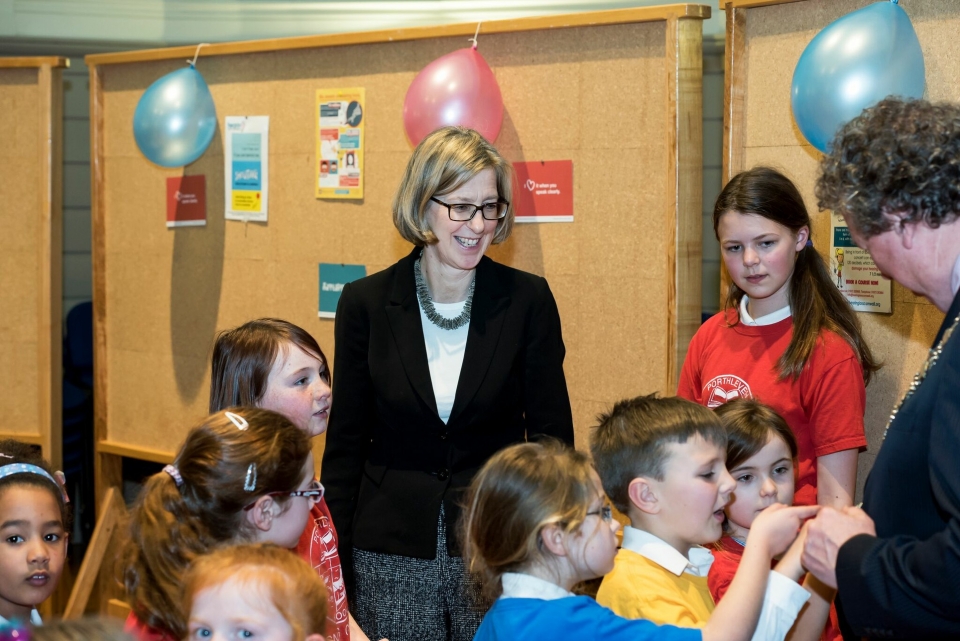
Our charity were also kindly chosen to be the recipients at a "See Hear" event organised by students, as part of their events planning segment of their training. It was a delight to have the opportunity to be present at "Steam, Great Western Hotel in Newquay, joined by the wonderful Porthleven School Signing choir. What a delight to see the enthusiasm of these youngsters enjoying singing and signing at the same time.
It has also been great to be part of Active Plus community project, delivering advice and support to various venues around the Duchy. It is great for us to find out what people feel they need to support them and for them to find out how we can be of help.
Our next big event in March is seeing the launch of our new website. We have been looking forward to having a website that we can keep current and fresh.
The revamp of the “face” of Hearing Loss Cornwall, has given
the charity the opportunity to refocus on its mission and share its clarity of vision.
Whilst this should seem a straightforward strategy, in fact, we have been
reminded of the challenge we face in addressing the struggles and diversity of
“hearing loss” experiences that we aim to reflect and represent.
Hearing Loss Cornwall is committed to improving the lives of
anyone in Cornwall living with hearing loss, which opens up the minefield of
hearing-related terminology and the distinction between the Deaf and hearing
culture. While some people cross over these cultures, at some point there are
two worlds that are culturally different and communicate via different mediums
(oral speech or sign language).
While some organisations work with the Deaf and others, with
people living with hearing loss, Hearing Loss Cornwall is privileged to bridge
the divide and to represent both the Deaf community and the whole hearing loss
spectrum. Individuals will choose how they wish to address themselves. Some
will identify as Deaf, others deaf, some will say they have a hearing
impairment, others will say they have never heard!
Our focus is to provide support to meet the challenges of
living in a hearing culture…. It is easy to forget that as many as 1 in 5
people in Cornwall find it difficult to access a life that most people take for
granted.
When you ring that bicycle bell, maybe they won’t hear you,
when you call out their name it may literally fall on deaf ears!
Yes, Deaf people can do everything except hear, but they do
need a lot of consideration from the hearing world and Hearing Loss Cornwall
will champion their cause!
Life at Hearing Loss Cornwall has been rather busy in recent months. With the retirement of Angela Williams after many years as Executive Officer, we now have Clare Greenwood in this role and with Brian Mason recently retiring from his role as Treasurer, we now have Paul Charlesworth helping on the financial front.
The voluntary sector has seen many changes, itself, over recent years and Hearing Loss Cornwall is working with its ambitious new team to put the charity on a firm footing to enable its users to benefit from the many services that it offers.
If you know of anyone in the hard of hearing community, Hearing Loss Cornwall may well be able to help to provide, support and advice.
Your workplace or community may wish to find out more about HLC's "Deaf Awareness" training courses which can be hugely beneficial in creating awareness by the hearing community of what the world is like and how challenged and isolated people can feel if they live with hearing loss.
By testing on mice, researchers from Tel Aviv University in Israel have found that congenital deafness can be caused by thyroid imbalance. The results may lead to therapeutic approaches to testing prevention of hearing loss before it occurs.
The study is unique because it tests the connection between two separate systems - the inner ear and the thyroid gland.
Hearing loss linked to disrupted thyroid hormone
The researchers tracked the hair cells of the cochlea of two groups of mice. One group, the control group, consisted of wild mice and the other of mutated congenitally deaf mice. The inner-ear hair bundles of the affected mice were labeled with bright colors to highlight their disorganization.
From this, the researchers were able to observe molecular defects consistent with disrupted thyroid hormone action or hypothyroidism in the deaf mice. Analysis of the images showed that the thyroid gland of the deaf mice grew incompletely or did not grow at all.
Still a long way
One of the researchers, Dr. Amiel Dror of Department of Human Molecular Genetics and Biochemistry at Tel Aviv’s Sackler School of Medicine, connects the two examined systems:
“Our work demonstrated that normal hearing fails to develop when thyroid hormone availability is insufficient as a result of a genetic mutation.”
He adds that the results create a platform for therapeutic approaches to prevent hearing loss before it occurs, but that there is still a long way to go before the research can contribute to the treatment of hearing impairment.
James Thomas, Project Manager for Midas, Pydar House, recognised a direct link between providing his staff with ear protection and supporting the local charity, Hearing Loss Cornwall, to further its aim in educating businesses, educational centres and individuals about potential risks to their hearing.
The team at Hearing Loss Cornwall were delighted to receive a box of ear defenders from Midas, Pydar House, to use in their “Deaf Awareness Training” sessions, so that people can get an idea of what it is like to live in a muffled world.
Responding to this donation, Clare Greenwood, ambassador for the charity stated, “Too loud for too long is wrong. Once hearing is damaged, it often can’t be restored. We would advise everyone to avoid exposure to noise, whenever they can, and wear earplugs in noisy environments. Sitting in front of speakers at a rock concert can damage your hearing in as little as 7.5 minutes!”
James Thomas agreed that, while the construction industry respond to the risk, other sectors of the community may not be so aware. “I think it will be a good idea if more people can benefit from these “Deaf Awareness Trainings”. I expect many young people think that it is only older people who suffer from hearing loss. I was quite surprised to learn that as many as 1 in 5 people in Cornwall are deaf or live with some hearing impairment and I was concerned to find that numbers are increasing.”



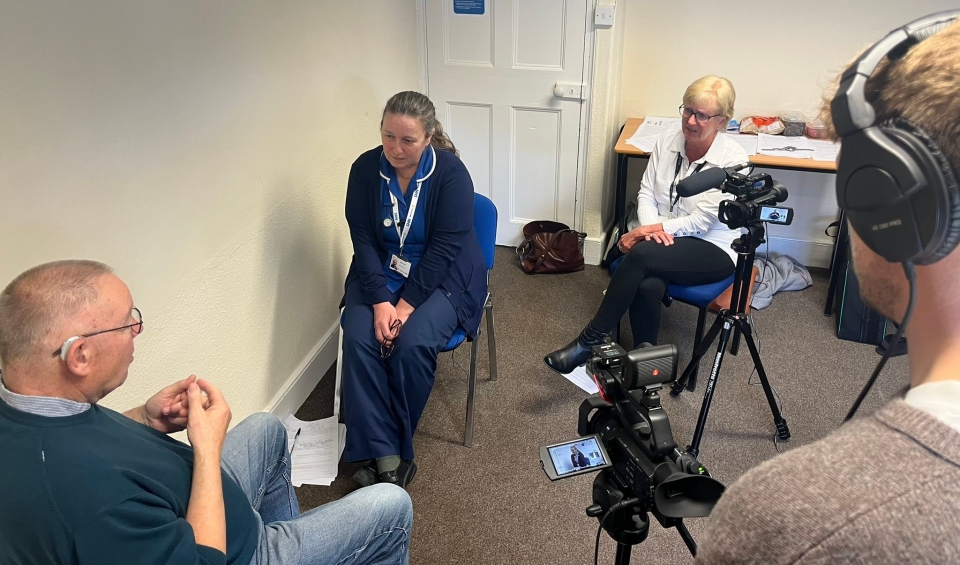

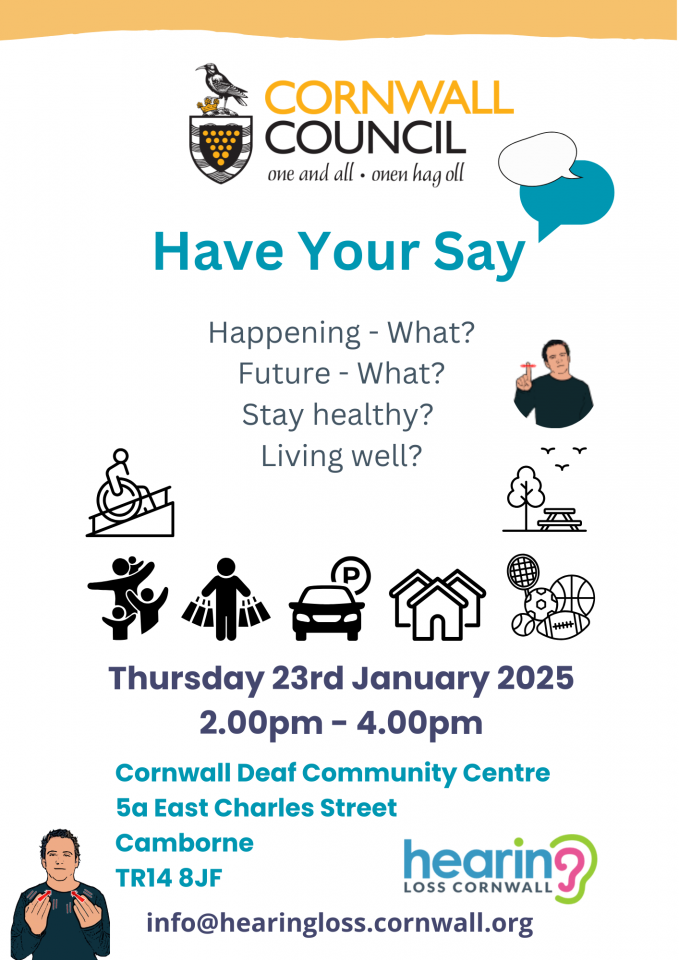
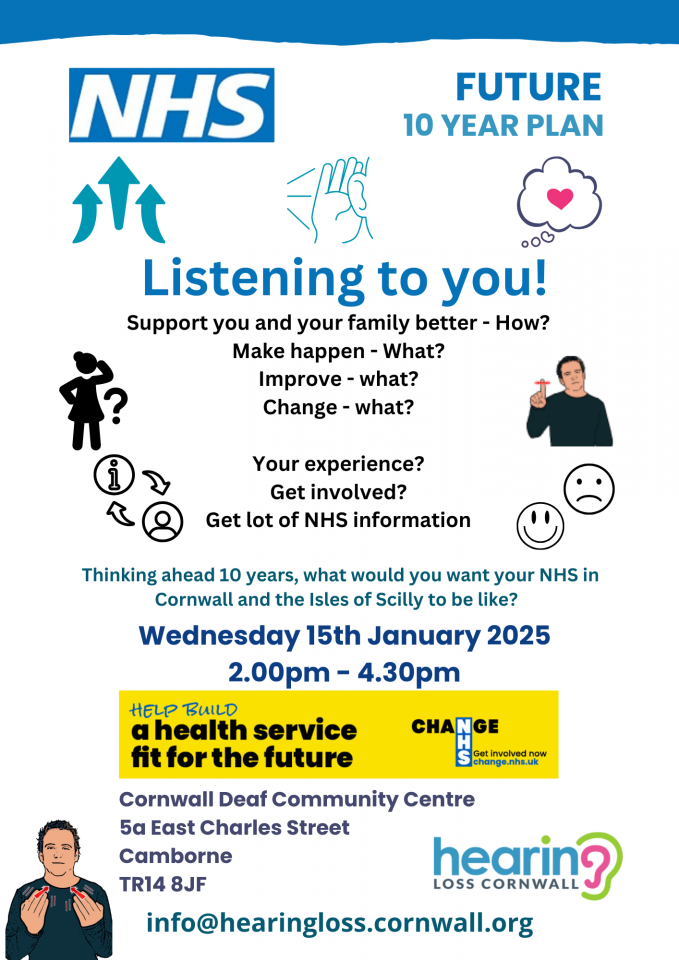
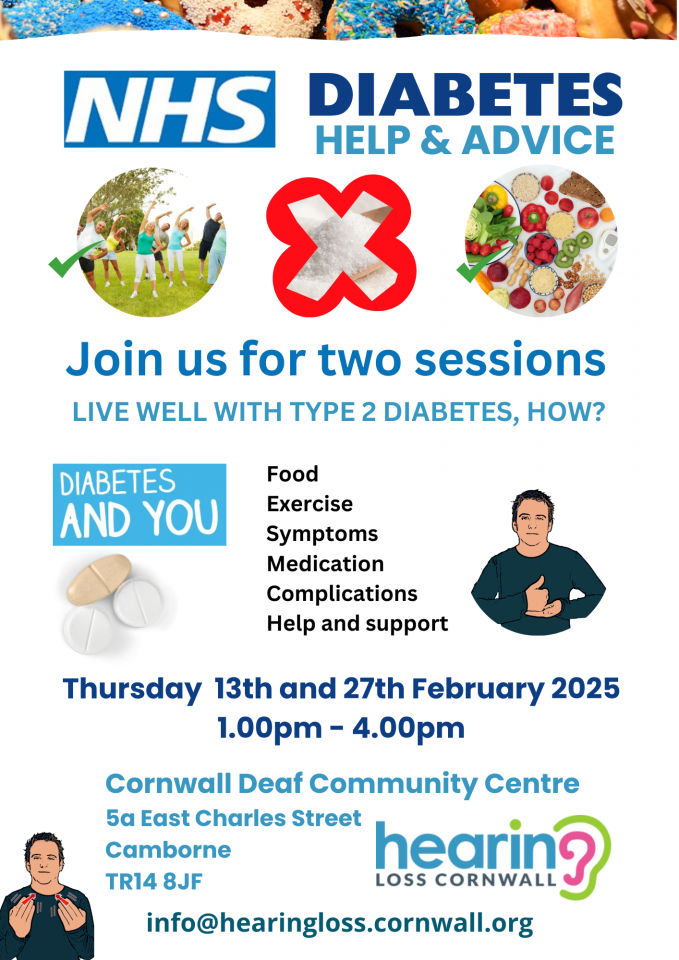
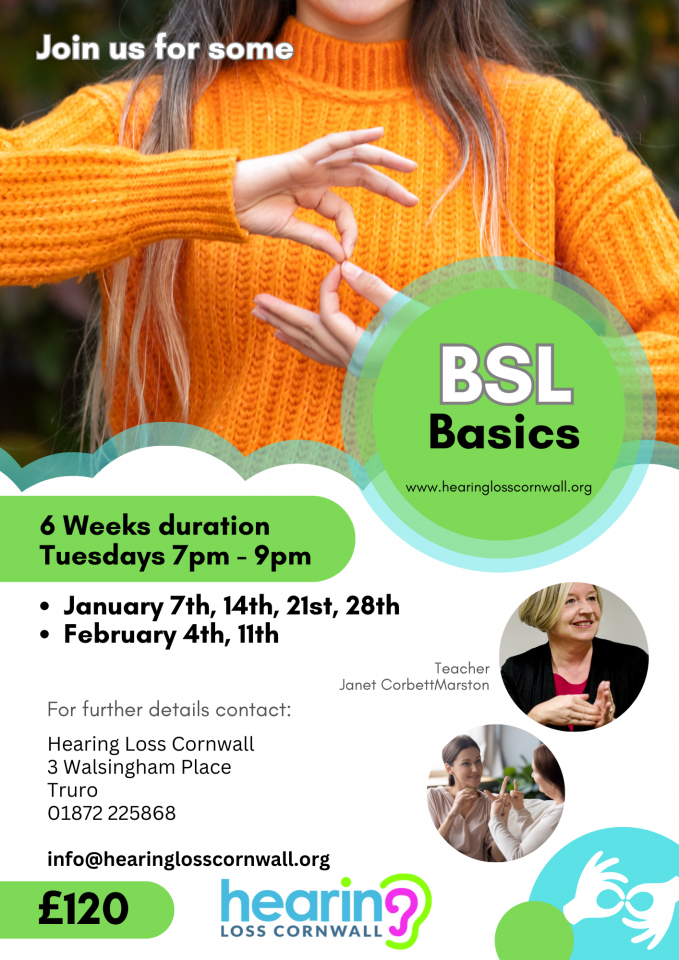
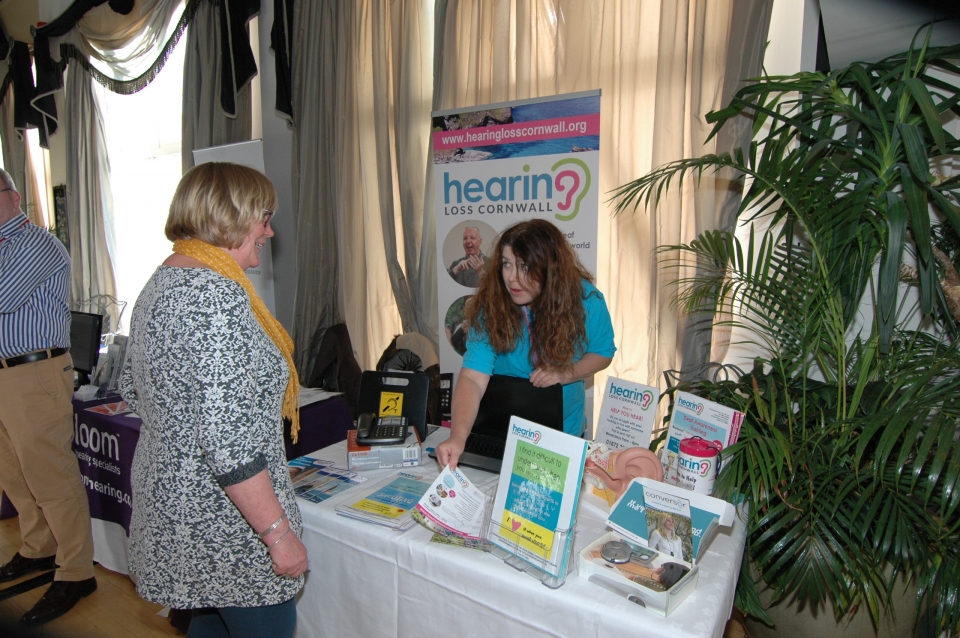

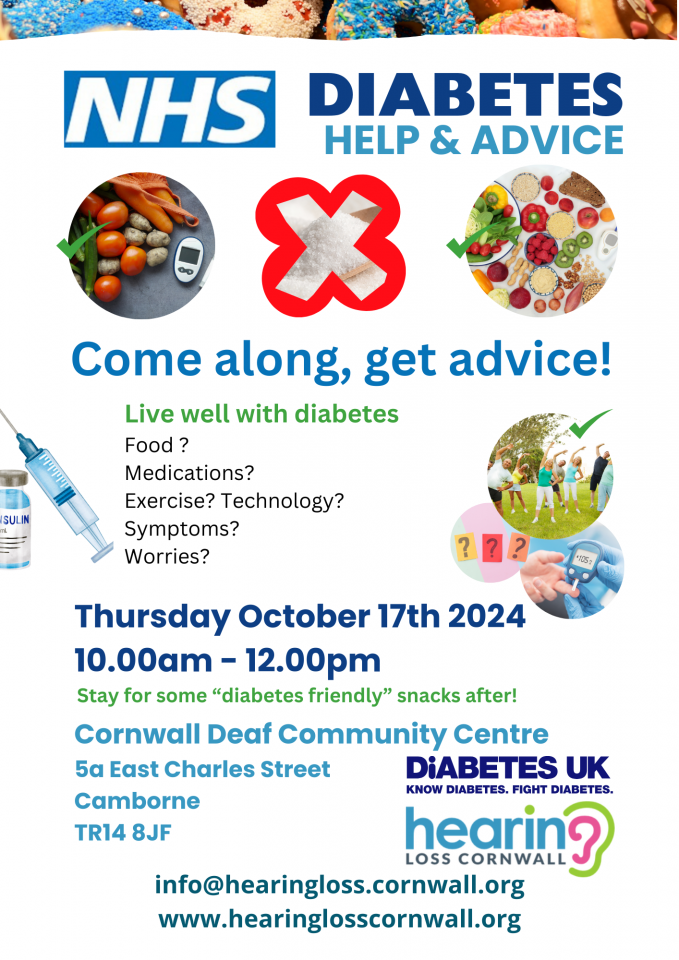
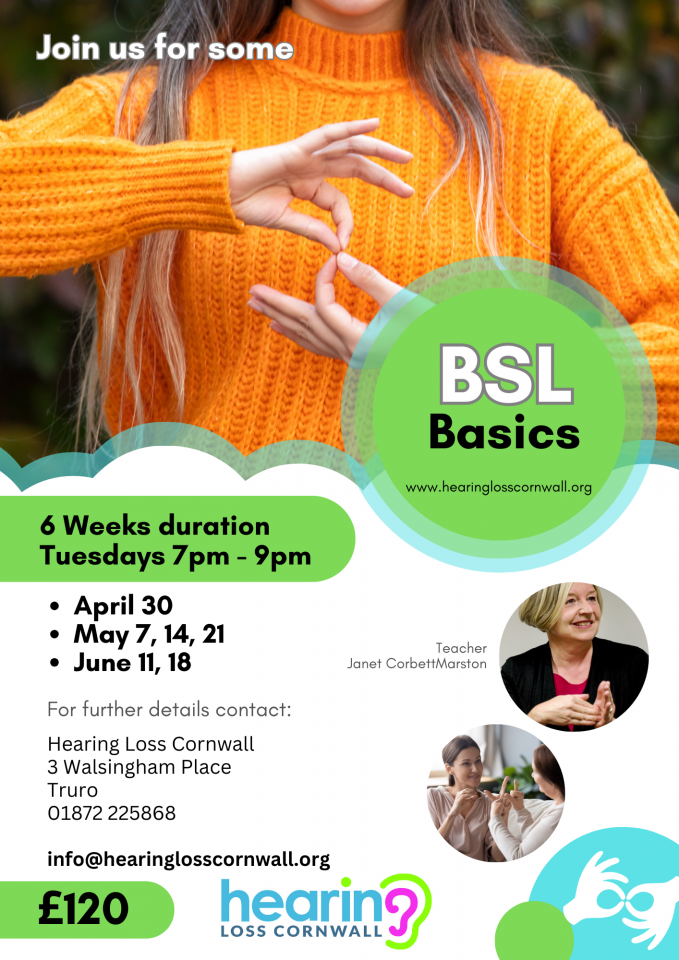

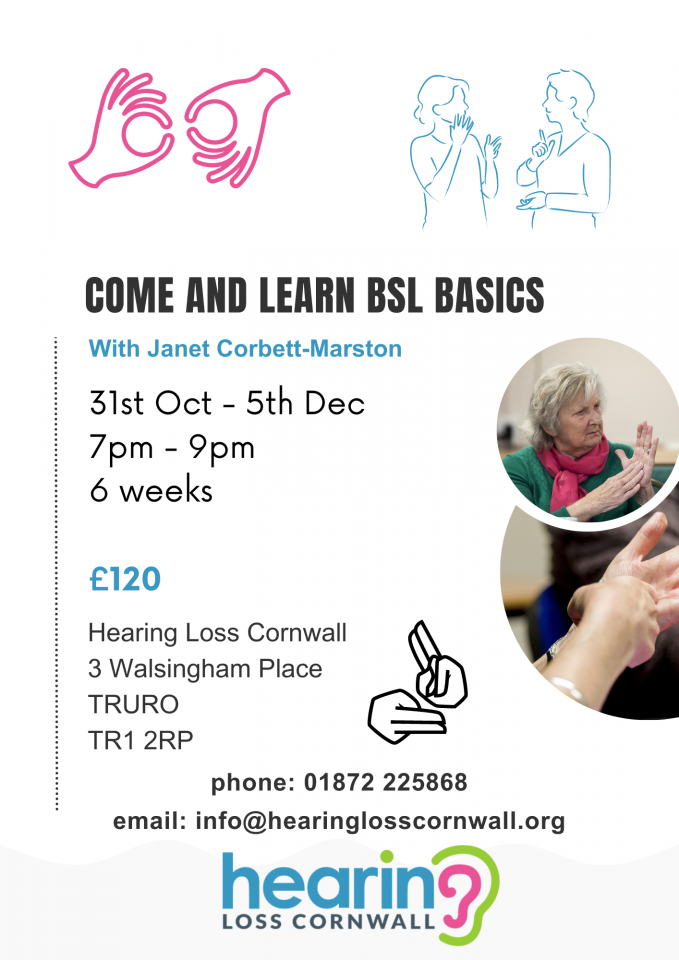
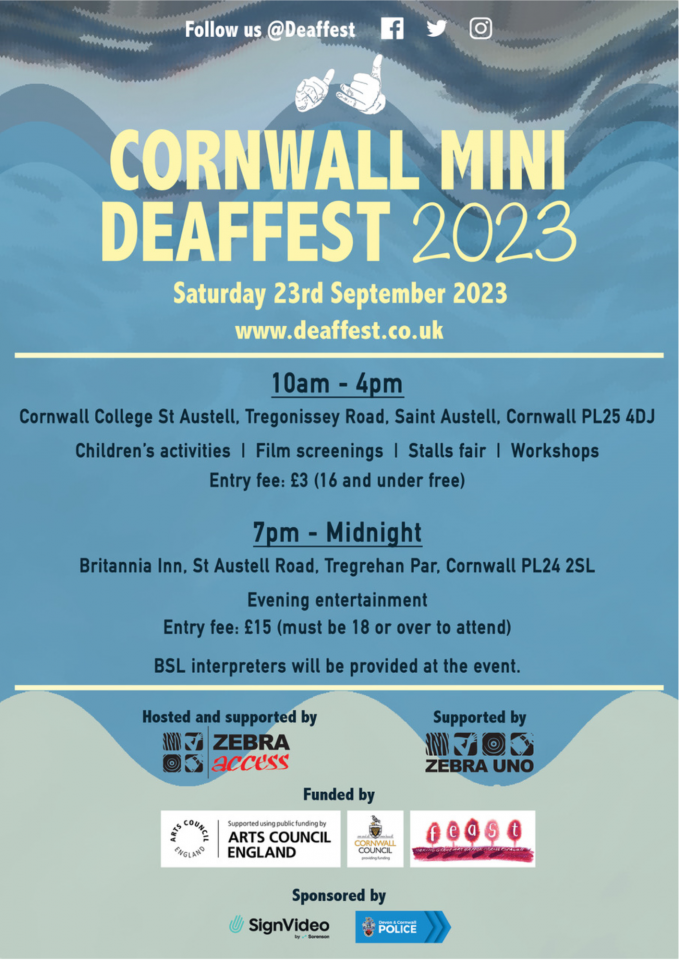
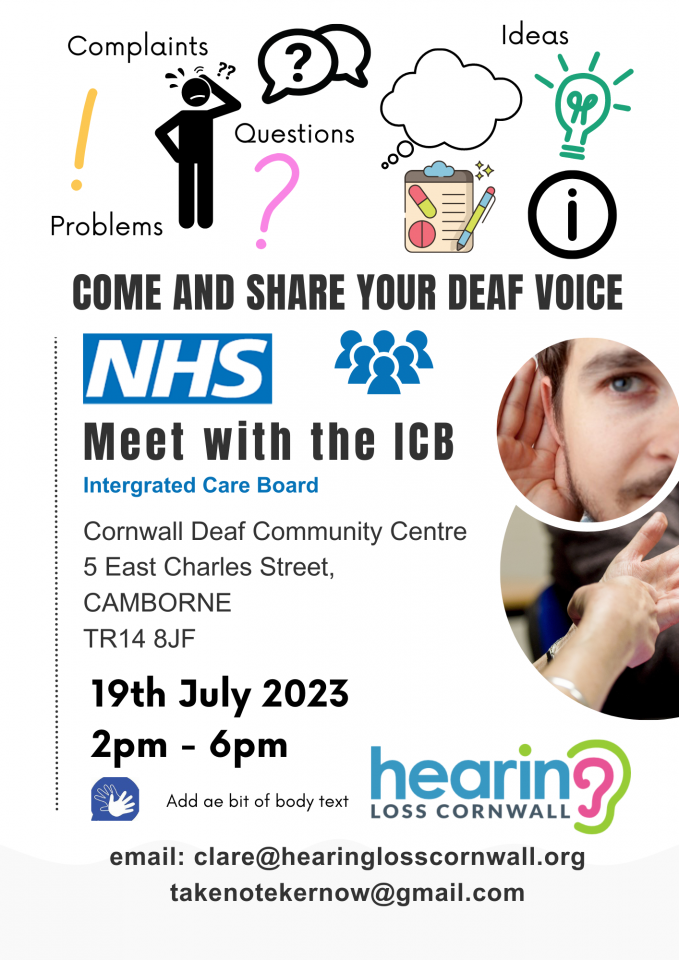

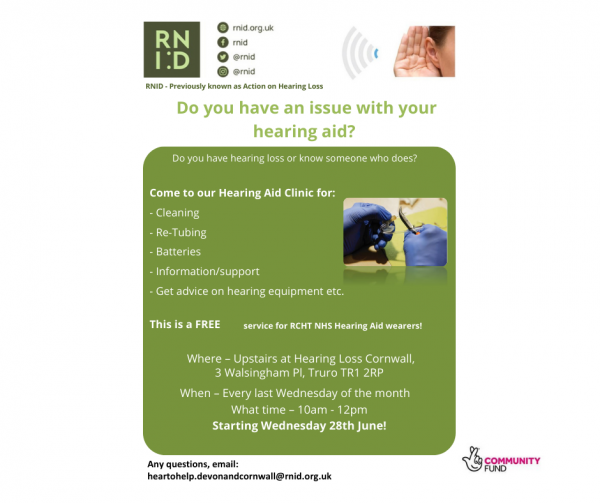
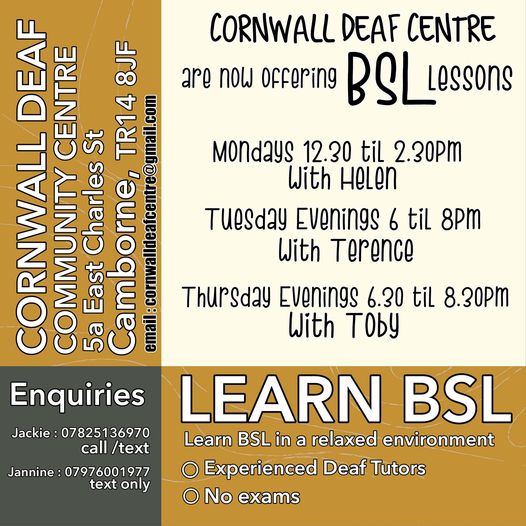

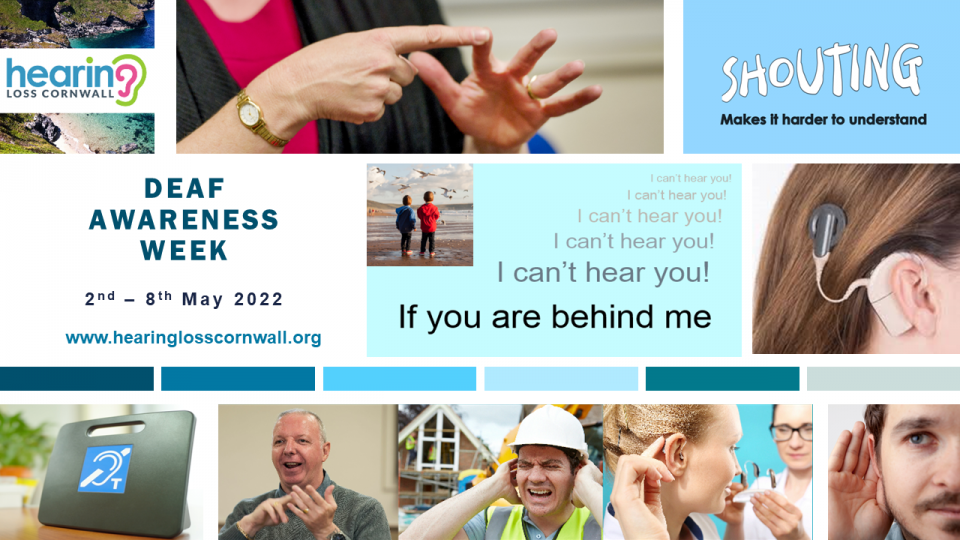

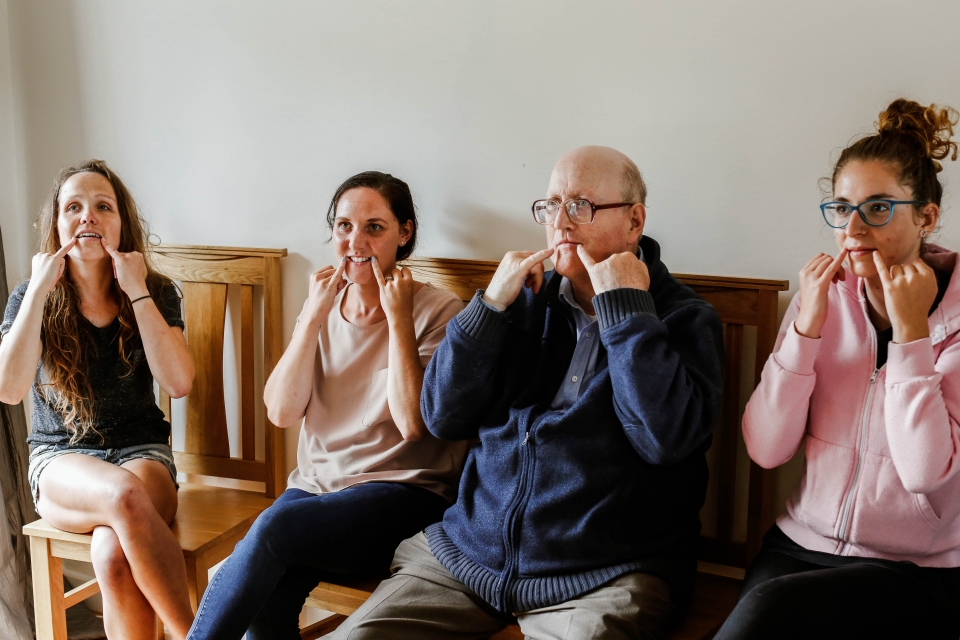
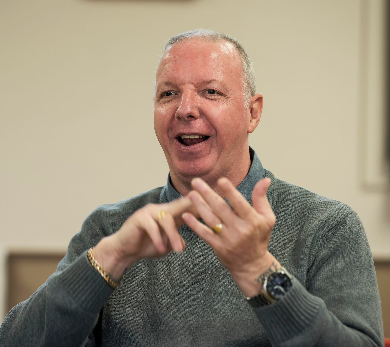

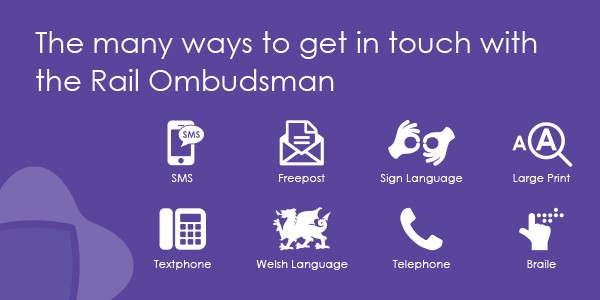
 Barclays